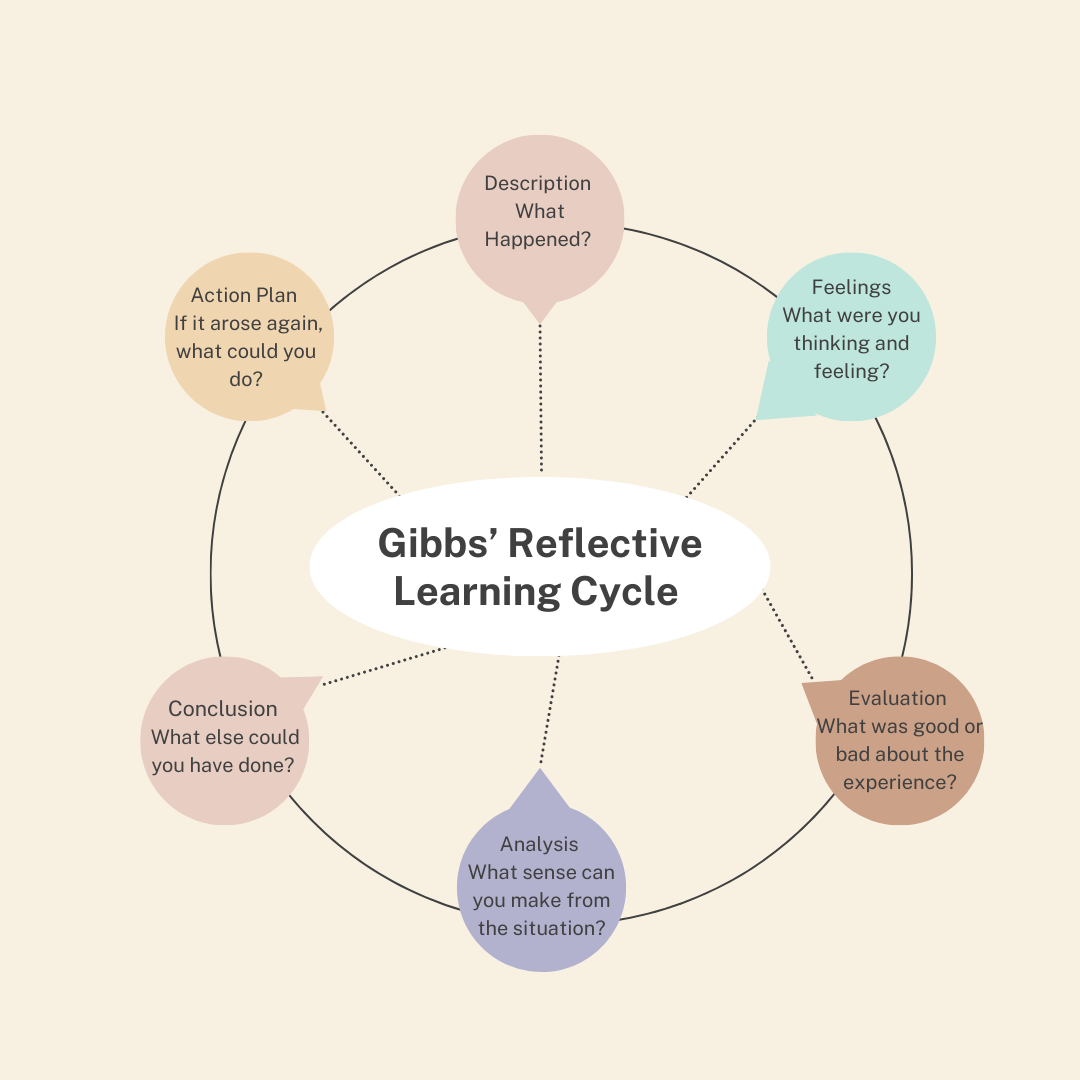
Experience One Aqamnik School in situ

Description: What Happened?
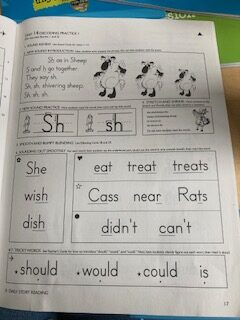
The in situ with the kindergarten grade one blend was a great experience. On February 5th, I went with the grade ones to observe their reading and writing skills. The staff and students were very welcoming, the school seemed to have a community within the school it was great to see. The thing I liked the most in the classroom was that they were already a small group, so it went smoothly. All three children worked very well together, and they knew their routine. The students were in two different reading level groups because they had different reading levels. The students started off with flashcards. the flashcards had sight words on them. After the flashcards, the students worked on the jumping spider activity in their Readwell decoding book, this helped the students sound out the word by jumping to each syllable. While working on the booklet the students tried smooth blending. This was like the spider jumping activity. The difference was adding the whole word again after sounding out the letters. The students then get to smooth blend the words. (Pic. #10).
This was when the students got dysregulated because they all needed a break from learning. Mr. Lunan recognized that the students needed a break. The two options were building a fort with chairs or drawing on the whiteboard. The students had a timer of three minutes to have the break. Mr. Lunan would tell the students they had one minute left, thirty seconds, and then count down from ten. The students knew to go back to their spots for reading.
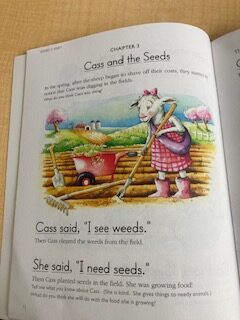
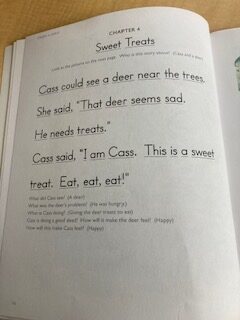
The next part of the English lesson was reading. The students had two different books because one was lower than the other. (Pic. 3-7) I liked the prompts Mr. Lunan used because they helped the students learn turn-taking and listening. The prompts were “my turn, voice off” and “ready, go”. The students then read the first two pages at the same time with Mr. Lunan. This was called a duet reading. This was great to see because they read in synch and if one of the students struggled to pronounce a word the other student would help. After they finished the chapter, they moved on to solo reading. Mr. Lunan asked if I wanted to assist with the students. I said yes and one of the girls came over to me and read the chapter over again alone this time. The two students I assisted had read the book before and improved within the short period I was with them. Mr. Lunan told the students that they improved so much from last week that they could move on to the next chapter with me. The main thing I noticed was the struggle between transition times. All the students were not used to a new person helping them. They needed the extra time for transitioning between activities and needed multiple breaks throughout the English lesson. At the end of the solo reading lesson when the two higher-level students were done reading and were able to free play, the lower-level student became overwhelmed and dysregulated because they did not want to read and found it challenging to stay on task. Mr. Lunan handled it very well. Mr. Lunan acknowledged the big behavior from the dysregulated student and used the prompt “Calm voice and ready to learn” The student heard Mr. Lunan and calmed down once they realized he was waiting for them to refocus on the reading. The student calmed down and then continued with the chapter reading. This happened multiple times throughout the lesson. The student was not confident with their reading skills and when they became dysregulated it was partly to get out of the hard activity but realized it would only take more time to try to improve their reading skills. Because I had to leave before their reading session was done, I did not get to thank the teacher and the students for letting me observe and help assist with the lesson.
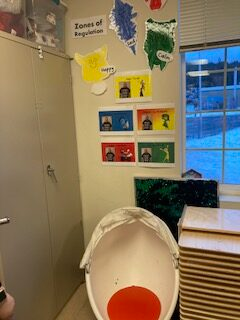
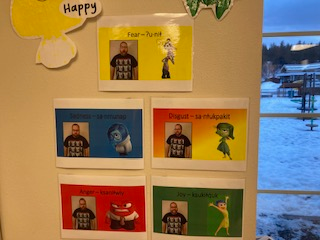
In the classroom, there is a zone of regulation. This zone was in the left back corner of the classroom by the teacher’s desk. The window was looking out the playground. I thought this was a great place in the classroom because it did not distract the other students learning and the student in the zone would be seen by the teacher when needed. This would help the student refocus when needed in the classroom. The zone of regulation is open to all students in the class, the students can go to it when they need time to refocus when they are having big emotions or are becoming dysregulated. If needed the teacher or the educational assistant would prompt the student to go to the corner if they noticed the student is about to have a big emotion and they need to calm down. I never saw a child be directed to the zone of regulation, but I did see students go there naturally when they knew they needed to calm down or be alone for a minute to refocus.
Feelings: What were you thinking and feeling?
I felt more confident in myself by the third session at Aqamnik School. I felt like I knew where to go and the plan for the morning was clearer. It was a great environment to have for my last in situ experience before practicum. During this experience, I got to learn new strategies and approaches for refocusing students when they got off task and by the third morning, I was able to help the students when it was needed. This brought back a familiar feeling for me because it reminded me of when I started as an Educational Assistant in 2021. I felt like the students were getting used to seeing our cohort in the room and us getting used to the space.
“There is a big difference between motivation and transformation”. Carrington, J. (2020).
Kids these days: A game plan for (re)connecting with those we teach, lead & love. IMpess
During the lesson when the students needed a break, I felt like I could relate to the students because I was taken out of class to work on my reading. I do not remember most of the experience, but I still remember the feeling of leaving my classroom alone to read with the specialist. Looking at the students when they practised their reading together I wished that I had duet reading with another student to help build my confidence when I was younger.
Evaluation: What was good or bad about the experience?
This was a great learning experience for me because students may have a bad day or not want to participate in a subject they do not like. Because they liked the structure of the English lesson there was less stress for the students because it was a safe space for them. During the English lesson, the students had a plan in place for the work that needed to be done during this time. Mr. Lunan had the workbooks ready and the books the students were reading as well. The students knew what was going to happen. When reading the flashcards the students demonstrated that they knew how to sound out words and then put them into a sentence. I noticed that these students were not as comfortable with me because I was new to them and not their primary teacher, Mr. Lunan. After the students demonstrated they knew how to sound out the words with flash cards. The students did very well with these. There were some words they struggled with because they learned them last week with Mr. Lunan.
The student’s motivation for English during this time was great because they had the structure and a teacher who kept them motivated and wanting to learn for a long time. Because of the structure, there was less surprise for the students and the teacher if it happened. I thought the layout of the lesson was great and worked for the three students. It accommodated all the students’ learning needs and learning through play helped the students stay focused. They had a token system where if they learned what they needed the reward was a break for playtime in the classroom.
The students demonstrated how they learn best and that this was a productive learning environment for them. One of the UVIC Teacher Competencies is to implement pedagogically context-appropriate sound practices linking assessment for/as/of learning, planning for learning, instructional strategies, and approaches to engage all students in relevant and personalized learning (11). This happened throughout the lesson because the students were learning new strategies about reading and getting assessed about the content they were learning. This helps teachers personalize the students’ learning to what they need to learn in an English lesson and how to adapt it for later.



Analysis: What sense can you make from the situation?
“A growth mindset is where you look at where you learned and stretch to learn new things. When there is a setback, they move forward and do not give up.” Carol Dweck
Mindset: The New Psychology to Success
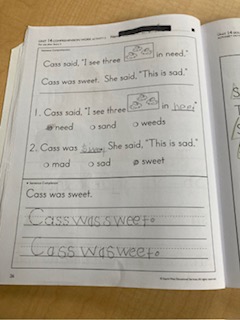
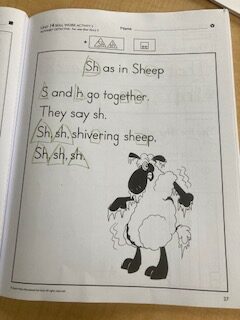
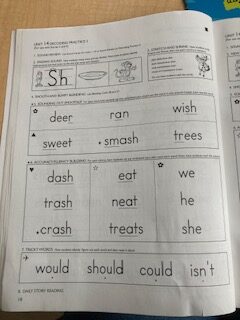
From this situation, I was reminded of what the growth mindset meaning to me and the students. The students were at different stages of reading level and adapted to their needs. The concepts of learning were the same for the students, but they would work on different sounds shown below. Mr. Lunan adapted the lessons to benefit all the students and encouraged them to continue with a reward system. Woolfolk, Winnie, Perry, (2020). Educational Psychology. Person Canada Inc. This helped the students stay focused on the task.
Conclusion: What else could you have done?
During the English lesson, I would have tried to step in and help the dysregulated student or pay more interest to the other students when they had a break. This would help me build a better connection with the students during the morning I was with them. I gained an understanding of how students learn differently and what an effective learning environment looks like. The students had positive support from the staff at the school. It showed through the morning meetings on Monday and during the lessons the teachers tried their hardest to keep them motivated and on task.
This was an effective learning environment for the students, and they also developed a new understanding of reading and gained confidence in reading. I know this is hard for most students who read below their level, but they worked hard when I observed. The students had the support they needed during breaks, transitions, and learning. The main takeaway for me was that the students have a great support system for their learning needs because of their class size and the amount of help they have in the classroom.
The students also acted differently when we were there. We were new to them, and they knew they could test our limits as student teachers. Once I get to know students and what helps them regulate, I feel like I will act according to the situation instead of waiting for the teacher who knows them best to act.
Action Plan: If it arose again, what could you do?
If this arose again, I would stay with the students once the lesson was completed and walk back with them after the lesson to build a better connection with the students. Because I was with them for a short time, I did not know how to assist with their learning, including when the students were dysregulated. I would learn some of the sentences or actions that cause the students to become dysregulated and act accordingly.
What will help me in the future is the regulation tools I learned from Mr. Lunan. He had many ways to help assist the students when they became dysregulated I will keep these in mind when I work in a classroom during practicum and future in situs.

Experience Two Math Lesson at Steeples Grade One Class.

Description: What Happened?
It was an eye-opening experience to teach for the first time in a classroom. This was my first time at Steeples Elementary, and for this assignment in Math Ashlyn and I created a lesson for a Grade One classroom focusing on patterns. We used a concrete method of teaching and then a worksheet for the students to follow. Before we started the lesson, we let the students play with the snap cubes. This helped with the engagement of the students when I started to teach the lesson.
The students were engaged with us for the lesson portion. I taught at the board with an example of a pattern with the snap cubes and drew the pattern on the board for the different learning styles. Ashlyn assisted the students who either were not following or needed extra help. This was where students got dysregulated or distracted and needed assistance to get back on track. The teacher and educational assistants helped the dysregulated students calm down.
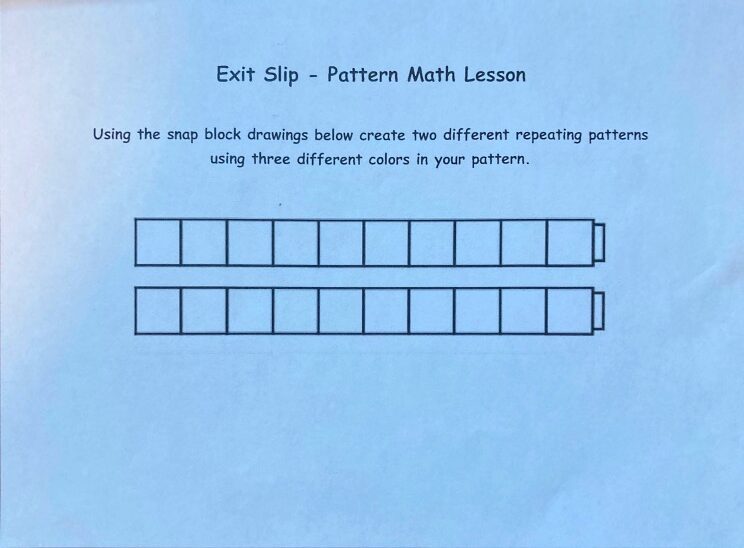
After working for ten minutes on the second page of the worksheet. Ashlyn directed the students’ attention to her, and we moved on to the exit slip for the lesson. The exit slip had two pictures of snap cubes and the students needed to color in a pattern they learned from the lesson. For example, a pattern they could have used was a red and blue (ABAB) repeating pattern. The students then got an exit slip to demonstrate their learning.
Feelings: What were you thinking and feeling?
My main objective was to keep the students engaged with the lesson and to be open-minded to what could happen inside the classroom.
The feelings I had through the experience were being nervous and excited because it was my first time in a classroom teaching a lesson. I did not know the students and briefly met with the teacher twice before teaching the lesson in their classroom. I was open-minded about the lesson because I wanted to develop positive and supportive connections with the students and teacher while in their classroom for a short period. I felt like our lesson about patterns was well planned out and the assessment tool we used helped with the lesson. I knew what I was teaching and what the students needed to learn by the end of the lesson. I feel like we needed better approaches to engage with the students because of the dysregulation in the classroom. “Every time you hear yourself say, that kid is” attention-seeking”, replace it with, that kid is “connection-seeking,” and watch your perspective change” Carrington, J. (2020). Kids these days: A game plan for (re)connecting with those we teach, lead & love. IMpess. Most of the students were connection-seeking in the classroom and it showed when we taught in the classroom. the students wanted to connect with us because they did not know me very well. I wished I was able to connect with the students before teaching them in the classroom.
Evaluation: What was good or bad about the experience?
Considering this was my first time teaching in the classroom, it was a great experience. I am happy this was an assignment for our math class. Through this in-situ, I learned how to plan a math lesson and assessment in the classroom. I thought of various ways after the lesson that the instructional strategies I used may or not have been the best for this classroom. Because it was in late October the teacher knew the students well enough to give us the appropriate information to create a lesson and assess how the students learned. The students were happy to see new people teaching them. Overall, it taught me how to run a classroom the timing of when to hand out activity sheets, and when to switch the student’s attention. The transitions were the hardest for Ashlyn and me because we did not know the students in a classroom setting including the student’s school routine or what a lesson looked like for this group of students. I feel like that would have benefitted us in creating the lesson for the students to know how they learn and what type of learning they would benefit from.
Analysis: What sense can you make from the situation?
With this experience, I am happy we got to student teach in a classroom so early in our education program. Considering the situation and the timing of the assignment it helped me grow as a student teacher and learn from this experience that if your plan is not perfect it is okay to go off script and learn from your mistakes in the moment.
Teaching is complex and not knowing the students or the way the teacher taught the students would have been beneficial to observe the classroom before teaching for a first time teaching a lesson. “It is all about relationship and connection. It is all so simple and remarkably complicated all at the same time.” Carrington, J. (2020). Kids these days: A game plan for (re)connecting with those we teach, lead & love. IMpess.
Conclusion: What else could you have done?
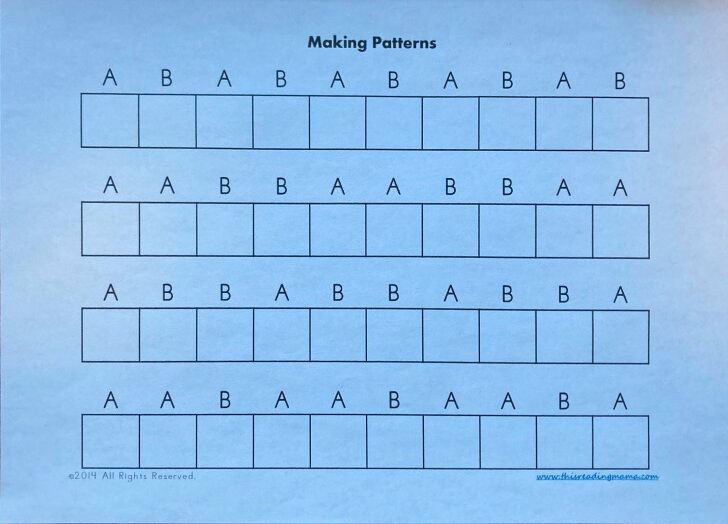
I would change the way we taught the lesson. The main mistake we made was handing out the worksheet before the snap cubes. The delay in the lesson setup made the explanation of the lesson more confusing for the students when they were learning. Instead, I would work with the students after they played with the snap cubes to create three patterns with them. The first pattern would be an ABAB pattern example 3. Then an ABBA pattern example 4. Then an AABA pattern. After the students demonstrated their listening skills and they could follow directions, I would then hand out the worksheet example 5. The students would have done three out of the four patterns with guidance. This would help Ashlyn and I to see if they can work independently with the patterns. The other issue I would change is the free play with the cubes. The students needed the free play, but we should have been more specific with the rules. The students ended up trading their colour cubes which made it harder for the students to follow the demonstration because they had different colours. In the lesson, they should have only had three different colors. Most children had more than four colours, so it was hard for them to create a repeating pattern that only needed two different colours. Therefore, it was harder to teach at the front because the students focused more on the colors, they needed versus the colours they had. Instead, I would have each table have three different colors total and if the student traded with their table there would be less of an issue. The UVIC Teacher Competencies (4) Demonstrating an understanding of the complexity of teaching and learning, helped me understand the steps I should have taken to help the students learn and to create a straightforward lesson with more accommodations.
Action Plan: If it arose again, what could you do?
In the future, I would plan out the lesson plan differently. The students learned differently than what we had initially written down. The students needed more active learning activities. All students learn differently and as a student teacher, I need to learn to be more accommodating for myself and the students in the classroom. UVIC Teacher Competencies state to develop an understanding of how learners learn in order to cultivate effective learning environments (12). This competency helped me think about the learning environment the students were in and I did not know how the students learned Math best. The students needed more guidance and less manipulatives during the lesson.
Again I would of used the regulation skills I learned as an EA and actively helped the students. Because I was nervous about teaching I did not focus enough attention on the students when they were learning with their snap cubes.
Resources/ Links